

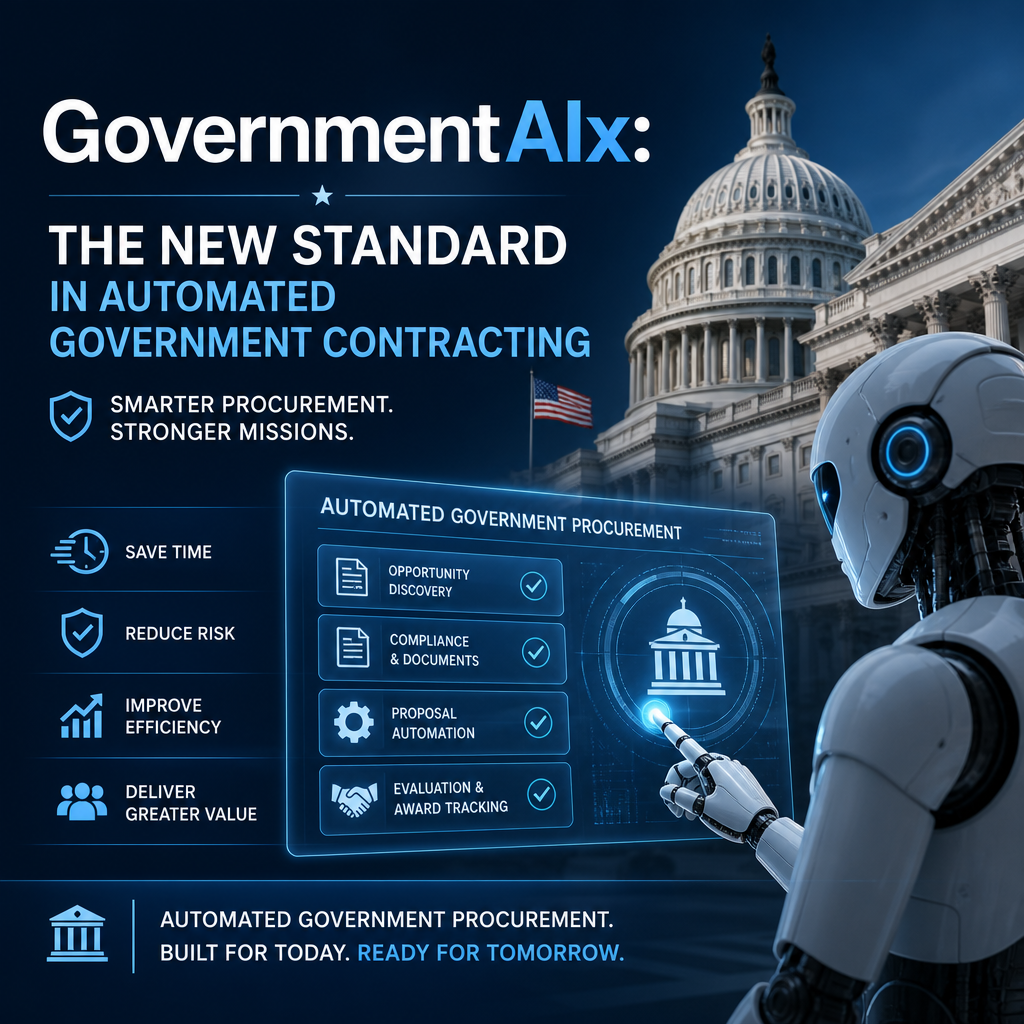
GovernmentAIx: The New Standard in Automated Government Contracting
The New Standard for Government Contracting: Automated Procurement with GovernmentAIx
Government contracting is entering a new era. Agencies are under growing pressure to deliver services faster, control costs, strengthen compliance, and make better use of public resources. At the same time, procurement teams often face outdated systems, fragmented data, lengthy approval cycles, and a limited pool of specialized talent.
Automated procurement with GovernmentAIx offers a modern path forward. By combining artificial intelligence, workflow automation, and procurement intelligence, GovernmentAIx can help public-sector organizations streamline contracting while improving transparency, consistency, and decision-making.
Why Government Procurement Needs a New Approach
Traditional procurement processes are often highly manual. Staff may spend hours reviewing solicitations, comparing vendor submissions, preparing documents, checking compliance requirements, and tracking deadlines across multiple systems.
These challenges can lead to:
- Longer procurement timelines
- Increased administrative costs
- Inconsistent evaluations
- Missed deadlines and renewal dates
- Limited visibility into contract performance
- Greater risk of errors or noncompliance
Government agencies also operate within strict regulatory frameworks. Every purchasing decision must be documented, defensible, and aligned with applicable policies. Manual processes make it harder to maintain that standard at scale.
Automation does not eliminate human responsibility. Instead, it gives procurement professionals the tools to focus on judgment, strategy, oversight, and public value.
How GovernmentAIx Supports Automated Procurement
GovernmentAIx is designed to help modernize the procurement lifecycle. Its capabilities can support agencies from the initial planning stage through contract management and performance monitoring.
Faster Solicitation and Document Analysis
AI-powered systems can review large volumes of procurement documents quickly. GovernmentAIx can help identify key requirements, summarize lengthy materials, organize information, and flag potential gaps for human review.
This allows procurement teams to spend less time searching through documents and more time developing effective acquisition strategies.
More Consistent Vendor Evaluation
Evaluating proposals requires careful attention to technical requirements, pricing, experience, past performance, and compliance. Automated workflows can help standardize evaluation criteria and create a clearer review process.
GovernmentAIx can support evaluators by organizing proposal information, highlighting relevant details, and helping teams compare submissions against established requirements. Final decisions remain with authorized personnel, but the process becomes more structured and efficient.
Improved Compliance and Audit Readiness
Government contracting depends on accurate records. Agencies must often demonstrate how decisions were made, who approved them, and whether procurement rules were followed.
Automated procurement platforms can maintain digital audit trails, track approvals, organize supporting documentation, and identify missing information. These features help agencies prepare for audits and reduce the risk associated with incomplete or inconsistent records.
Better Contract Visibility
Awarding a contract is only one part of the procurement process. Agencies must also monitor deliverables, milestones, spending, renewals, amendments, and vendor performance.
GovernmentAIx can provide a centralized view of contract activity, helping teams identify important dates, potential risks, and performance issues before they become larger problems. This supports proactive contract administration rather than reactive problem-solving.
The Benefits for Public-Sector Organizations
The value of automated procurement extends beyond speed. When implemented responsibly, it can improve the overall quality of government operations.
Key benefits include:
- Efficiency: Reduce repetitive administrative work and accelerate routine processes.
- Transparency: Create clearer records of evaluations, approvals, and contract activity.
- Consistency: Apply procurement policies and workflows more uniformly.
- Risk management: Identify missing information, potential conflicts, and compliance concerns earlier.
- Better decision-making: Give teams faster access to relevant procurement data.
- Scalability: Support larger workloads without requiring proportional increases in staff.
Automation can also improve the experience for vendors. Clearer requirements, more organized communications, and predictable workflows make it easier for qualified businesses to participate in government opportunities.
Responsible AI in Government Contracting
Adopting AI in the public sector requires careful governance. Agencies must establish clear policies around data security, privacy, accessibility, accountability, and human oversight.
GovernmentAIx should be used as a decision-support system, not as an unchecked replacement for procurement professionals. Human reviewers remain essential for interpreting complex circumstances, managing public accountability, and making final determinations.
Successful implementation also depends on:
- Defining appropriate use cases
- Establishing review and approval controls
- Protecting sensitive procurement data
- Training staff on system capabilities and limitations
- Monitoring performance and improving workflows over time
Building the Future of Procurement
The future of government contracting will not be defined by technology alone. It will be shaped by how effectively agencies combine innovation with sound policy, professional judgment, and public stewardship.
Automated procurement with GovernmentAIx gives agencies an opportunity to replace fragmented, time-consuming processes with intelligent workflows and better information. By improving how contracts are planned, evaluated, awarded, and managed, government organizations can become more responsive, accountable, and efficient.
As procurement demands continue to grow, adopting practical automation may no longer be a competitive advantage. It may become the new standard for delivering effective public services.