
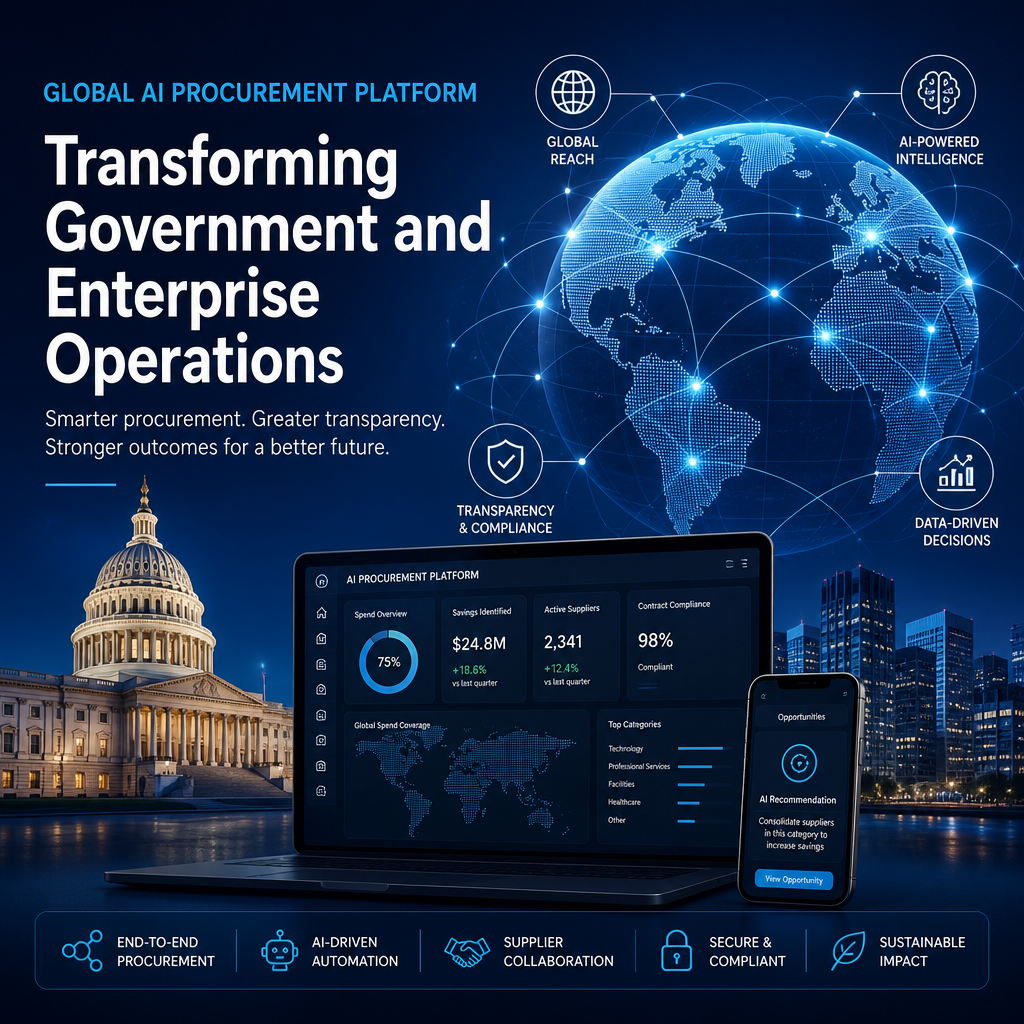
Global AI Procurement Platform Transforming Government and Enterprise Operations
The Global AI Procurement Platform Transforming Government and Enterprise Operations
Artificial intelligence is changing how organizations plan, purchase, and manage technology. Governments and enterprises are under growing pressure to modernize operations, control costs, and adopt AI responsibly. A global AI procurement platform is emerging as a powerful solution, connecting buyers with trusted vendors while making complex purchasing decisions faster, safer, and more transparent.
Rather than treating AI procurement as a series of disconnected transactions, these platforms create a structured digital environment for discovering, evaluating, acquiring, and managing AI solutions.
Why AI Procurement Is Becoming a Strategic Priority
Traditional procurement processes are often slow and fragmented. Organizations may rely on lengthy tenders, manual reviews, spreadsheets, and disconnected vendor conversations. These methods can make it difficult to compare AI products or determine whether a solution meets security, compliance, and performance requirements.
AI procurement introduces a more strategic approach by helping organizations:
- Identify suitable AI vendors and products
- Compare capabilities, pricing, and implementation requirements
- Standardize evaluation and approval processes
- Improve contract and supplier management
- Monitor ongoing performance, risk, and compliance
For public-sector organizations, these benefits can support better services and more accountable spending. For enterprises, they can accelerate innovation while reducing operational and financial risk.
How a Global AI Procurement Platform Works
A global AI procurement platform typically combines marketplace capabilities with workflow automation, data analysis, and governance tools. It can support the full procurement lifecycle, from initial research to long-term supplier management.
Vendor Discovery and Evaluation
Organizations can search for AI solutions based on industry, use case, location, security standards, integration requirements, and budget. Instead of reviewing hundreds of unstructured vendor websites, procurement teams can use standardized information to create more meaningful comparisons.
The platform may also help verify vendor credentials, certifications, references, and previous deployments. This is particularly important for government agencies and heavily regulated industries that must demonstrate due diligence.
Automated Procurement Workflows
AI procurement platforms can automate repetitive steps such as request creation, document collection, approval routing, and bid analysis. Automation reduces administrative work and helps ensure that every purchase follows the organization’s policies.
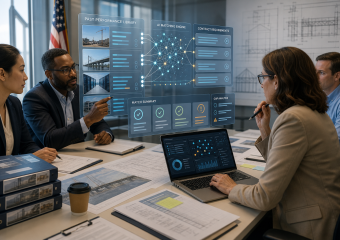
Procurement teams can establish predefined evaluation criteria, while stakeholders from legal, finance, security, and technology departments review the same information in one environment.
Contract and Supplier Management
Purchasing an AI system is only the beginning. Organizations must also monitor service-level agreements, renewal dates, data protection obligations, usage limits, and performance outcomes.
A centralized platform provides greater visibility into supplier relationships. It can alert teams to upcoming renewals, missing documentation, or changes in vendor performance. This helps prevent costly service interruptions and supports stronger negotiations.
Advancing Responsible AI Adoption
The growth of AI has created new concerns around privacy, bias, cybersecurity, transparency, and accountability. Procurement teams are increasingly responsible for identifying these risks before an AI product enters the organization.
A global AI procurement platform can support responsible adoption by incorporating governance checks into purchasing workflows. These checks may include:
- Data residency and privacy requirements
- Cybersecurity assessments
- Model transparency and explainability
- Human oversight policies
- Bias and fairness testing
- Regulatory and contractual compliance
- Clear ownership of data and intellectual property
Embedding these criteria early ensures that responsible AI is not treated as an afterthought. It becomes a standard part of how organizations select technology.
Benefits for Governments and Enterprises
Although public and private organizations have different priorities, both can benefit from a more connected procurement ecosystem.
Governments can improve transparency, encourage competition, and make it easier for smaller technology providers to participate in public-sector opportunities. Standardized processes can also support cross-agency collaboration and reduce duplicated work.
Enterprises can shorten purchasing cycles, identify solutions that fit their existing infrastructure, and gain better visibility into their AI investments. Centralized data can reveal overlapping tools, underused subscriptions, and opportunities to consolidate spending.
For both groups, the result is a shift from reactive purchasing to strategic technology management.
The Future of AI Procurement
As AI becomes embedded in finance, healthcare, education, logistics, defense, and customer service, procurement will play a larger role in shaping how these systems are deployed. Organizations will need platforms capable of managing international regulations, multiple currencies, changing technical standards, and increasingly complex vendor ecosystems.
The most effective platforms will do more than connect buyers and sellers. They will provide intelligence, governance, collaboration, and measurable outcomes throughout the procurement lifecycle.
A global AI procurement platform can therefore become critical infrastructure for modern organizations. By combining efficiency with accountability, it helps governments and enterprises adopt AI with greater confidence—and turn technological investment into lasting operational value.